

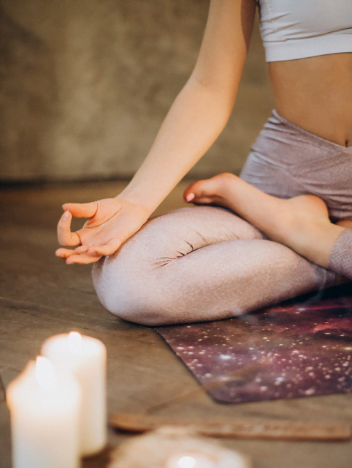
Learning how to meditate for anxiety can help you feel calmer, more focused, and more in control of your day.
For beginners, meditation does not have to be complicated. It is simply the practice of slowing down, focusing your mind, and learning how to sit with your thoughts without letting them take over.
Before I started meditating daily, I struggled to protect my peace of mind. I learned that morning meditation can be powerful because the way you start your day often shapes your mood, focus, and energy.
In this post, I’ll show you how to start meditating daily for beginners, especially if you want support with anxiety, stress relief, mental clarity, and inner peace.
Meditation is not about being perfect. It is about returning to yourself, one breath at a time.
How to Meditate for Anxiety
Table of Contents
Deep Breathing
Deep breathing for anxiety is a simple way to calm your mind, relax your body, and prepare yourself for daily stress.
Breathing is essential for survival, but intentional breathwork can also support stress relief, mental clarity, and emotional balance. One of the best techniques for beginners is diaphragmatic breathing, also known as belly breathing.
As someone who struggles with anxiety, deep breathing has changed how I handle stress. Even a few minutes of slow, mindful breathing can help me feel more grounded.
To practice, take a slow deep breath from your diaphragm, hold it gently for a few seconds, then slowly exhale. As you breathe in, imagine bringing calm energy into your body. As you breathe out, imagine releasing stress, tension, and worry.
You do not have to be perfect. Just start with a few minutes each day and build from there.
Reduce Distractions
To get the most meditation benefits, start by reducing distractions. Phones, notifications, and electronics can interrupt the quiet time you need to fully relax and focus.
If you’re using meditation for stress relief, try practicing shortly after you wake up, before checking your phone or jumping into daily tasks. A quiet morning meditation can help you begin the day with a clearer mind and calmer energy.
I’ve found that taking a few extra minutes to lie in bed, breathe, and set positive intentions helps me feel more grounded. A relaxed position can also give your mind more space to reflect, reset, and think clearly before the day begins.
For beginners, meditation is about creating a peaceful moment before the outside world starts demanding your attention.
Use Aromatherapy
What does meditation do if scents aren’t involved? Meditation can still be powerful on its own, but aromatherapy can help create a calmer space and make the practice feel more intentional.
Using aromatherapy for meditation is one of the simplest ways to prepare your space for relaxation, mindfulness, and stress relief. Scents like lavender, sandalwood, frankincense, and eucalyptus can help set the mood and signal to your body that it’s time to slow down.
Burning incense before meditation is an easy way to create a peaceful atmosphere, clear your mind, and make your space feel more grounded. I love using incense during my nighttime meditation routine because it helps me relax, unwind, and ease into rest.
For beginners, scent is not required for meditation, but it can make the experience feel more calming, focused, and sacred.
Safety note: Always burn incense in a well-ventilated area, keep it away from flammable items, and never leave it unattended.
Morning Yoga
Yoga for beginners can be a great way to prepare your body and mind for the day.
Personally, I’ve found that when I skip stretching, my body tends to hold on to unnecessary tension. A simple morning yoga routine helps me feel more relaxed, grounded, and ready to move through the day with better energy.
Some stretches I naturally include in my morning routine are:
- Downward Dog
- Child’s Pose
- Middle Splits
- Lower Back Side Stretches
- Palm Stretches
- Cobra Pose
- Hamstring Stretch
These are the poses I usually gravitate toward, but your routine does not have to look exactly like mine. Intuitive stretching can be very beneficial because it allows you to listen to your body and focus on the areas that feel tight, tense, or in need of extra care.
Start slow, breathe deeply, and avoid forcing any stretch. The goal is not perfection — it’s to release tension and prepare your body for the day.
Spend Time Outside
One of the best meditation tips for beginners is to spend time outside.
I like to take at least one walk per day, usually around my neighborhood with a quick detour into greenery so I can feel more connected to nature.
Walking in nature can support mental clarity, stress relief, and emotional balance. It also gives you a chance to breathe fresh air, move your body, and reset your mind without overcomplicating your meditation routine.
Even a short walk can become a form of meditation when you slow down, notice your surroundings, and let yourself be fully present.
Practice Mindfulness
Before I learned how to meditate at home, I thought meditation meant sitting on the floor in silence, legs crossed, and humming loudly. After taking a college course on mindfulness meditation for anxiety, I realized meditation can be part of everyday life.
For many people, exercise is also a form of mindful meditation. It requires focus, body awareness, breath control, and consistency. Personally, when I feel stressed, giving my best effort at the gym helps clear my mind and makes me feel accomplished no matter what.
Now that we’ve covered how to start meditating at home, you can begin building a routine that supports your peace, focus, and overall wellness.

Meditation will not feel the same every day, and that’s okay. Our environments, emotions, and energy are always changing — just like life. Experienced meditators understand that true inner power comes from adapting to change and finding beauty in each moment.
The benefits of meditation can grow the more you practice. Each session gives you another opportunity to quiet your mind, reconnect with yourself, and tap into parts of your awareness that may have felt hidden before.


