

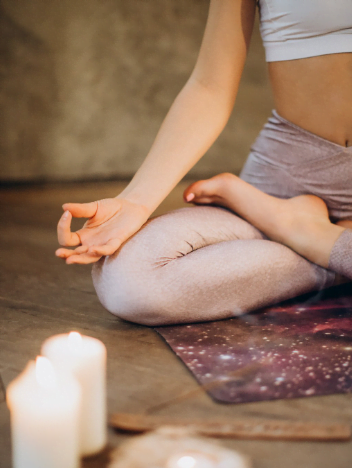

Learning how to meditate for beginners can be a transformative step toward greater emotional awareness, mental clarity, and inner peace.
Meditation encourages you to observe your thoughts without immediately reacting to them. According to the National Center for Complementary and Integrative Health, mindfulness meditation may help reduce anxiety and stress while supporting emotional well-being.
Before I began meditating daily, I struggled to protect my peace of mind. Incorporating morning meditation into my routine helped me become more intentional about where I direct my attention and how I respond to everyday stressors.
In this guide, I’ll show you how to start meditating daily for beginners and explore its potential benefits for:
-
Stress relief and anxiety management.
-
Emotional regulation and self-awareness.
-
Mental clarity and concentration.
-
Developing a greater sense of inner peace.
Meditation isn’t about silencing every thought. It’s about developing a healthier relationship with your thoughts, becoming more present, and learning to respond to life with greater awareness — one breath at a time.
How to Meditate for Anxiety
Table of Contents
Deep Breathing

Practicing deep breathing for anxiety is one of the simplest ways to support emotional regulation, reduce physical tension, and cultivate a calmer state of mind.
What makes intentional breathing so powerful is its relationship with the autonomic nervous system. Slow, diaphragmatic breathing can encourage parasympathetic nervous system activity, which is associated with the body’s natural “rest and digest” response.
According to Harvard Health, mindful breathing can help relieve stress and create a healthier relationship with anxious thoughts.
As someone who struggles with anxiety, incorporating breathwork into my daily routine has changed how I respond to stressful situations.
Try this simple breathing exercise:
Sit comfortably and relax your shoulders.
Slowly inhale through your nose for four seconds, allowing your abdomen to expand.
Gently exhale for six seconds, releasing physical tension.
Repeat for three to five minutes at a comfortable pace.
As you inhale, visualize welcoming peace and clarity into your body. As you exhale, imagine releasing accumulated stress and worry.
With consistent practice, deep breathing may help support emotional awareness, concentration, and stress management.
You don’t need to master meditation overnight. Sometimes, a few moments of intentional breathing are enough to reconnect with yourself and approach your day with greater awareness.
Reduce Distractions

To experience the benefits of meditation, start by creating an environment that encourages mindfulness and minimizes distractions. Phones, notifications, and digital stimulation can compete for your attention, making it more difficult to remain present.
Practicing morning meditation for stress relief before checking your phone allows you to direct your attention intentionally rather than immediately responding to external demands. Research on mindfulness meditation suggests that consistent practice may support emotional regulation, reduce stress, and improve psychological well-being.
I’ve found that spending a few extra minutes in bed practicing deep breathing, reflecting, and setting positive intentions helps me begin my day with greater clarity and emotional balance.
To create a more peaceful morning meditation routine:
Silence notifications and minimize digital distractions.
Find a comfortable, quiet position.
Focus on your breathing and bodily sensations.
Observe your thoughts without judgment.
Set a positive intention for the day ahead.
Before allowing the outside world to influence your thoughts and emotions, give yourself an opportunity to connect with your own.
Protecting your peace begins with being intentional about where you place your attention.
Use Aromatherapy

Meditation can be beneficial on its own, but incorporating aromatherapy for meditation can create a more immersive sensory experience that encourages relaxation, mindfulness, and emotional awareness.
Our sense of smell is closely connected to brain regions involved in memory and emotional processing, including the amygdala and hippocampus. This connection helps explain why certain aromas can evoke memories, influence our mood, and create associations with relaxation.
Some popular scents to explore during meditation include:
Lavender: Studied for its potential calming effects and support for relaxation.
Sandalwood: A warm, earthy aroma traditionally used during spiritual and mindfulness practices.
Frankincense: A resinous fragrance commonly associated with contemplation and spiritual reflection.
Eucalyptus: A refreshing aroma that can create an invigorating sensory experience.
According to the National Center for Complementary and Integrative Health, research suggests lavender aromatherapy may offer relaxation benefits, although more clinical evidence is needed.
I personally enjoy burning incense during my nighttime meditation routine because it helps me transition from the stimulation of the day into a more peaceful, reflective state of mind.
Over time, consistently pairing a particular scent with meditation may help your brain associate that fragrance with relaxation.
Safety tip: Burn incense in a well-ventilated space, avoid directly inhaling the smoke, and never leave it unattended. If you have asthma or respiratory sensitivities, consider smoke-free alternatives.
Meditation doesn’t require fragrance, but engaging your senses intentionally can make your practice feel more personal, grounding, and restorative.

Morning Yoga

Practicing yoga for beginners is a wonderful way to connect your mind and body while improving flexibility, mobility, and emotional awareness.
Yoga combines intentional movement, controlled breathing, and mindfulness. According to the National Center for Complementary and Integrative Health, regular yoga practice may help reduce stress, improve balance, promote better sleep, and support overall well-being.
Personally, I’ve noticed that when I skip stretching, my body tends to retain more physical tension. Incorporating a morning yoga routine helps me release that tension and approach the day with greater mental clarity and freedom of movement.
Some stretches I naturally gravitate toward include:
Downward Dog: Stretches the hamstrings, calves, and shoulders.
Child’s Pose: Encourages relaxation while gently stretching the back.
Middle Splits: Develops hip mobility and inner thigh flexibility over time.
Lower Back Side Stretches: Helps relieve tension and improve spinal mobility.
Palm Stretches: Supports wrist and forearm flexibility.
Cobra Pose: Gently stretches the abdominal muscles and chest.
Hamstring Stretch: Supports lower-body flexibility and mobility.
I particularly enjoy intuitive stretching, which involves paying attention to bodily sensations and adapting your movements to your individual needs. This relates to interoception — your nervous system’s ability to sense and interpret internal bodily signals.
Start slowly, breathe naturally, and never force a stretch. Advanced movements, such as middle splits, require gradual progression and are not necessary for beginners.
Remember, yoga isn’t about achieving the perfect pose. It’s about becoming more aware of your body, releasing unnecessary tension, and creating space for both physical and mental well-being.
Spend Time Outside

One of my favorite meditation tips for beginners is to reconnect with nature through mindful walking.
I make an effort to take at least one walk per day, usually around my neighborhood with a detour into a green space. It’s a simple habit that helps me process my thoughts, release tension, and reconnect with the present moment.
Research on nature exposure and mental health suggests that spending time in natural environments may help reduce stress, improve mood, and support cognitive function.
This practice is closely related to Shinrin-yoku, or Japanese forest bathing, which encourages intentionally engaging your senses while spending time in nature.
To turn your daily walk into a meditative experience:
Slow your pace: Allow yourself to explore without rushing toward a destination.
Breathe mindfully: Pay attention to the natural rhythm of your breathing.
Engage your senses: Notice the surrounding greenery, natural sounds, and earthy aromas.
Disconnect digitally: Limit unnecessary phone use and external stimulation.
Observe your thoughts: Allow them to arise and pass without judgment.
Meditation doesn’t always require sitting still. Sometimes, moving through nature gives your mind the space it needs to process emotions, restore attention, and regain a sense of balance.
Think of your daily walk as an opportunity to nourish both your body and your consciousness.
Practice Mindfulness

Before I learned how to meditate at home, I thought meditation required sitting cross-legged on the floor, closing your eyes, and humming. It wasn’t until I took a college course on mindfulness meditation that I realized how naturally mindfulness could be integrated into everyday life.
Meditation is ultimately about cultivating awareness. According to the National Center for Complementary and Integrative Health, mindfulness practices may help reduce anxiety, improve emotional well-being, and support stress management.
Even exercise can become a form of moving meditation when you intentionally focus on your breathing, physical sensations, and movements. Personally, when I’m feeling stressed, giving my best effort at the gym helps me redirect my attention, process emotions, and develop a renewed sense of accomplishment.
As you develop your own meditation routine, remember that every session may feel different. Your emotions, surroundings, and physical state are constantly changing, and mindfulness teaches you to navigate those changes with greater awareness rather than resistance.
With consistent practice, the potential benefits of meditation include:
Greater emotional awareness and regulation.
Improved concentration and mental clarity.
Reduced stress and repetitive thinking.
A healthier relationship with your thoughts and emotions.
Greater awareness of the mind-body connection.
Meditation isn’t about escaping reality or eliminating every uncomfortable thought. It’s about becoming more conscious of how you experience reality and learning to respond with intention.
The beauty of mindfulness is that every moment offers another opportunity to practice it. Whether you’re exercising, walking through nature, or simply breathing in silence, you can create space for greater self-awareness and inner peace.